


Author:
Mr. Harvinder Singh
Professor & Dean (Testing & Consultancy)
Guru Nanak Dev Engineering College, Ludhiana
View Published Article
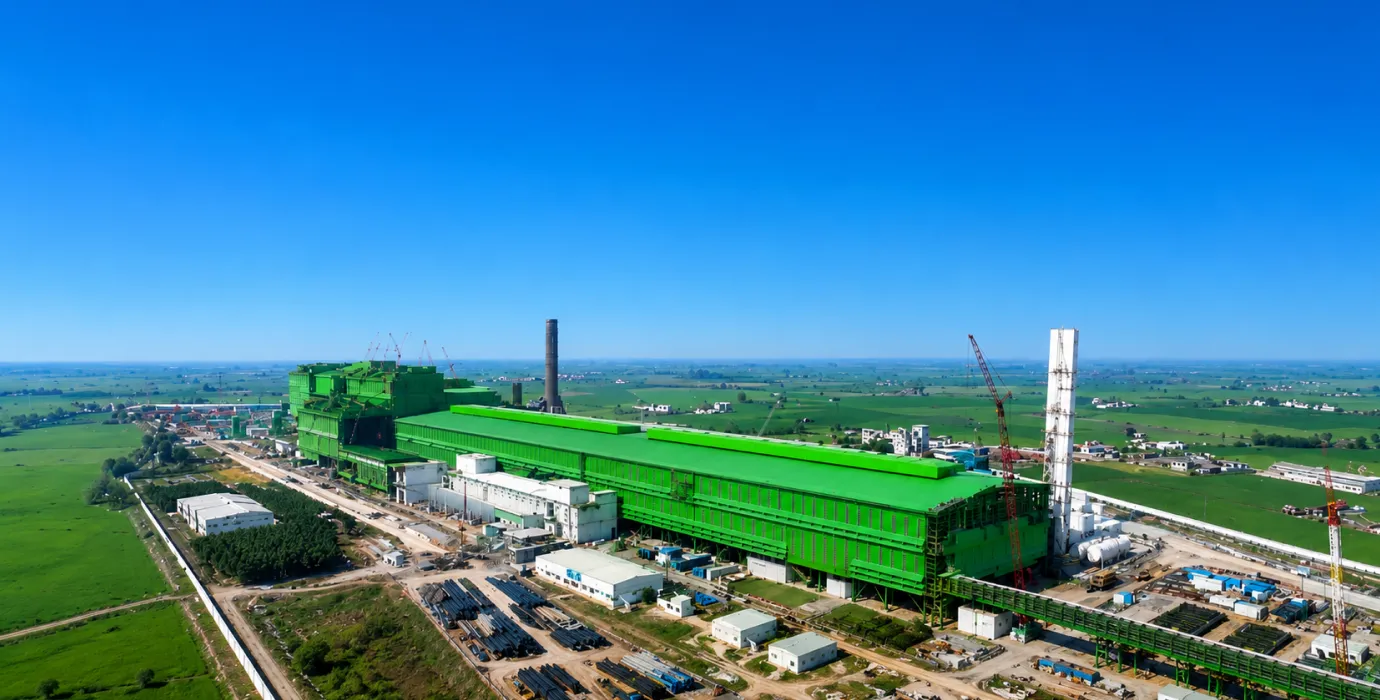
The recent launch of Tata Steel’s new manufacturing facility at Ludhiana marks an important shift in the Indian steel industry, particularly for North India where a large quantity of reinforcement steel bars, commonly called rebars or TMT steel, are consumed in housing and infrastructure projects. The new plant is based on Electric Arc Furnace (EAF) technology and is designed to manufacture steel using automobile scrap. For consumers, builders and even many engineers, this naturally raises questions about quality, consistency, safety, and durability of concrete buildings being / to be constructed using the steel from such production units. Many people still associate scrap-based steel with inferior quality, but the reality is far more technical. The quality of steel depends less on whether scrap is used and far more on how scientifically the steel is manufactured, refined, controlled and tested during the entire production process. Ignoring any one step in the entire process could result in compromised steel production.
Traditionally, high-quality steel in India has been produced through the Blast Furnace – Basic Oxygen Furnace route, often referred to as the BF-BOF route. In this process, iron ore, coal and limestone are used to produce molten iron inside a blast furnace, which is then converted into steel in a basic oxygen furnace. Since the process begins from iron ore rather than mixed scrap, manufacturers get very strong control over chemistry and impurities. Large integrated steel plants operating through this route usually maintain highly sophisticated laboratories, automation systems and quality control mechanisms. As a result, rebars manufactured through this route are generally known for consistent chemical composition, reliable ductility, predictable mechanical properties and excellent structural performance over long periods. Such steel is often preferred for critical infrastructure, bridges, industrial projects and high-rise structures where long-term reliability is essential. However, the blast furnace route also has major disadvantages. It consumes enormous amounts of coal and energy, generates high carbon emissions and places a heavy burden on the environment. Worldwide, this traditional route is increasingly being criticised because of its large contribution to greenhouse gas emissions.
The Electric Arc Furnace route, which Tata Steel has adopted at Ludhiana, represents a more modern and environmentally conscious approach in steel production. In an EAF plant, steel scrap is melted using high-powered electric arcs rather than coal-fired blast furnaces. The plants use carefully segregated and processed scrap along with sophisticated refining technologies such as ladle metallurgy, oxygen injection and continuous casting systems to control the chemistry and cleanliness of the final product. Many developed countries including the USA, Japan and several European nations already produce a large portion of their steel through EAF technology. Conventionally, high-grade structural steels and automotive steels are manufactured through advanced scrap-based routes that now are being used in production of rebars for construction projects. Therefore, the use of scrap itself is not a sign of poor quality. In fact, automobile scrap can often be a high-quality raw material for rebar production due to their better controlled composition than scrap from open sources.
The real difference lies in process control. In a modern EAF facility operated by an organised steel producer such as Tata Steel, the incoming scrap is sorted, analysed and refined carefully before it becomes finished steel. Sophisticated sensors and laboratory systems continuously monitor chemistry, temperature and impurity levels. This allows manufacturers to produce rebars with highly consistent mechanical properties, improved metallurgical uniformity and compliance with BIS standards. Such modern EAF plants are fundamentally different from many small-scale regional steel units that melt mixed open-market scrap with limited refining and weaker quality systems.
In many parts of North India, including Punjab and nearby regions, a considerable quantity of rebars is produced through smaller induction furnace or open scrap melting routes. In these units, scrap may come from demolished buildings, industrial machinery, railway scrap, unknown imported scrap or mixed metallic waste. When such scrap is not properly segregated and refined, impurities such as Copper, Sulfur, Phosphorus or Tin may remain uncontrolled inside the steel. Their presence can affect the ductility, weldability, corrosion behaviour and consistency of rebars. Two rebars may both carry the same Fe500 marking and may even pass basic strength tests, yet their actual long-term performance under stress, fatigue, corrosion or seismic loading may differ substantially. The problem therefore is not merely the use of scrap, but the absence of sophisticated metallurgy and process control in many unorganised rebar production units.
In India, rebars are governed mainly by BIS standard IS1786, which specifies parameters such as yield strength, tensile strength, elongation, bend and rebend performance, chemical composition and dimensional tolerances. Rebar grades such as Fe415, Fe500 and Fe500D are commonly used in construction. The ‘D’ grade indicates improved ductility, which becomes particularly important during earthquakes or dynamic loading conditions. While BIS certification is mandatory, experienced engineers understand that merely satisfying minimum BIS values does not automatically guarantee identical structural performance. Large organised manufacturers generally maintain tighter tolerances and more consistent properties across batches compared with poorly controlled plants. This consistency becomes critical in long-life structures where performance over decades matters more than simply passing initial laboratory tests.
From a structural engineering perspective, strength alone is not sufficient to judge the quality of rebars. Modern structures depend heavily on ductility, fatigue resistance, weldability and corrosion resistance. During earthquakes, for example, rebars must deform gradually and absorb energy rather than fail suddenly. Rebars manufactured with inconsistent chemistry or poor ductility may behave unpredictably under such conditions. Steel produced through well-controlled blast furnace or modern EAF routes generally offers more reliable performance because the metallurgical structure remains more uniform and predictable. On the other hand, poorly refined open-scrap steel may show greater variability from one batch to another, which increases uncertainty in structural behaviour.
An important but often neglected aspect is that modern durability engineering no longer evaluates reinforcement merely on the basis of strength at the time of construction. Increasingly, engineers worldwide assess structures probabilistically by examining how likely corrosion, cracking and deterioration are to occur over the intended service life of the building. In such reliability-based approaches, both average behaviour and variability become important. A structure may be designed for a nominal service life of 50 or 75 years, but if the quality of steel, concrete or workmanship varies significantly from one location to another or one member to other in the same building or even in different batches of concrete and rebars being used in construction of some building, the probability of premature deterioration rises sharply. Poorly controlled steel routes often exhibit greater scatter in chemical composition, residual elements, rib geometry and mechanical behaviour. Even if average strength appears acceptable, higher variability can increase uncertainty in the long-term performance.
Recent probabilistic durability studies show that corrosion cracking in reinforced concrete behaves not as a simple deterministic process but as a stochastic accumulation process. Corrosion products accumulate gradually around the rebars until a critical corrosion level is reached and the surrounding concrete start cracking. The time required for this cracking depends not only on the average corrosion rate but also on the variability of corrosion behaviour caused by moisture fluctuations, oxygen availability, chloride ingress, porosity variations and metallurgical inconsistency in and around steel embedded in concrete members. This places both the concrete quality and consistency in chemistry of rebars in the central role that defines the service life of any RCC building. Structures constructed with more uniform, scientifically controlled rebars and better on-site quality control generally exhibit lower variability and therefore more predictable long-term performance. In contrast, rebars produced through poorly controlled routes and with average or poor concrete quality may display larger stochastic spread both in strength and corrosion behaviour, causing some regions to deteriorate significantly earlier than expected even when average laboratory test results appear satisfactory. This distinction becomes extremely important in field performance assessment. Engineers often evaluate the probability of cracking or failure as a function of normalized service life. Buildings constructed with materials having low variability show delayed but sharp deterioration, whereas those with high variability tend to develop scattered early distress. This explains why some buildings appear healthy for years and then suddenly begin showing widespread cracking, while others exhibit isolated distress much earlier. The underlying issue is frequently not only concrete quality or environmental exposure but also variability in reinforcement quality and metallurgical consistency.
Even high-quality rebars can suffer corrosion if concrete quality is poor and/or curing is inadequate is high. In India, the two most common cement types used in reinforced concrete are OPC (Ordinary Portland Cement) and PPC (Portland Pozzolana Cement). OPC gains strength quickly and is preferred where rapid construction is needed, but it also generates higher heat during hydration and may develop microcracks more easily if curing practices are poor. PPC, on the other hand, develops strength more gradually but generally provides denser and less permeable concrete over the long term. This denser concrete helps reduce the penetration of moisture, CO2 and Chlorides toward the embedded steel reinforcement, thereby reducing corrosion risk.
When high-quality rebars from controlled BF-BOF or EAF routes are used together with properly designed PPC concrete, the resulting structure often demonstrates excellent durability, crack resistance and long-term performance. In contrast, if inconsistent rebars from poorly controlled scrap routes are combined with poorly cured or porous concrete, the chances of corrosion, cracking, spalling and deterioration increase substantially. Many structural failures are not caused by a single factor alone but by the combined effect of poor steel quality, weak concrete practices and inadequate site supervision. This aspect shifts the onus on adhering to the standard engineering practice protocols during the entire construction phase of buildings. Ignoring very often leads to reduced building service life and frequent repairs.
One of the most important aspects of Tata Steel’s Ludhiana EAF project is its environmental significance. Conventional blast furnace steelmaking depends heavily on coal and is among the largest industrial sources of carbon dioxide emissions globally. EAF technology dramatically reduces carbon emissions because it relies on recycled steel scrap and electricity instead of coke-fired iron making. It also reduces mining activity, conserves natural resources and supports the concept of a circular economy in which existing steel is continuously recycled rather than discarded as waste. The use of automobile scrap is particularly important because India is expected to generate increasing volumes of end-of-life vehicle scrap in coming years, more so in and around developed areas/ cities. Organised recycling through EAF plants can convert this waste into high-quality construction steel while reducing environmental burden. Such developments also align strongly with global Sustainable Development Goals (SDG) related to the responsible consumption, sustainable industry and climate action. As India urbanises rapidly and demand for steel continues to rise, environmentally responsible steel making will become increasingly important. Modern EAF technology therefore represents not only a manufacturing shift but also a strategic move toward lower-carbon infrastructure development.
The discussion therefore should not be simplified into ‘ore-based steel versus scrap-based steel.’ The real distinction lies between scientifically controlled steel making and poorly controlled steel making. A modern EAF plant operated by a reputed manufacturer with advanced refining systems, strict BIS compliance and strong quality assurance can produce rebars of high quality and consistency required to meet demand of modern construction industry and standards. Such steel may perform as reliably as steel produced through the traditional blast furnace routes while simultaneously offering major environmental advantages. For consumers and builders, the safest approach remains the use of BIS-certified rebars from reputed manufacturers along with properly designed and cured concrete. Long-term structural safety depends not on a single material choice alone but on the overall quality culture maintained throughout the entire construction process.