

Building a home involves multiple structural decisions, and selecting the right TMT rebar grade is one of the most critical. The wrong choice can affect structural strength, ductility, crack resistance, and long-term durability, especially when buildings are exposed to varying environmental and loading conditions.
For most residential structures, Fe500D or Fe550 grade TMT rebar offers a practical balance of strength and flexibility, while 550 SD TMT rebars are better suited for higher load-bearing demands and seismic conditions. Along with grade selection, factors like design quality, detailing, and proper installation also influence long-term structural performance.
TMT Bar Grades Explained
Understanding TMT rebar grades is important before selecting reinforcement for residential construction. These grades are classified mainly based on yield strength and ductility, which determine how the bar behaves under stress before permanent deformation begins.
Common TMT rebar grades in India include:
- Fe500: Standard strength grade used in general residential construction
- Fe500D: A higher ductility version of Fe500 designed for improved flexibility
- Fe550: Higher strength grade suitable for heavier structural loads
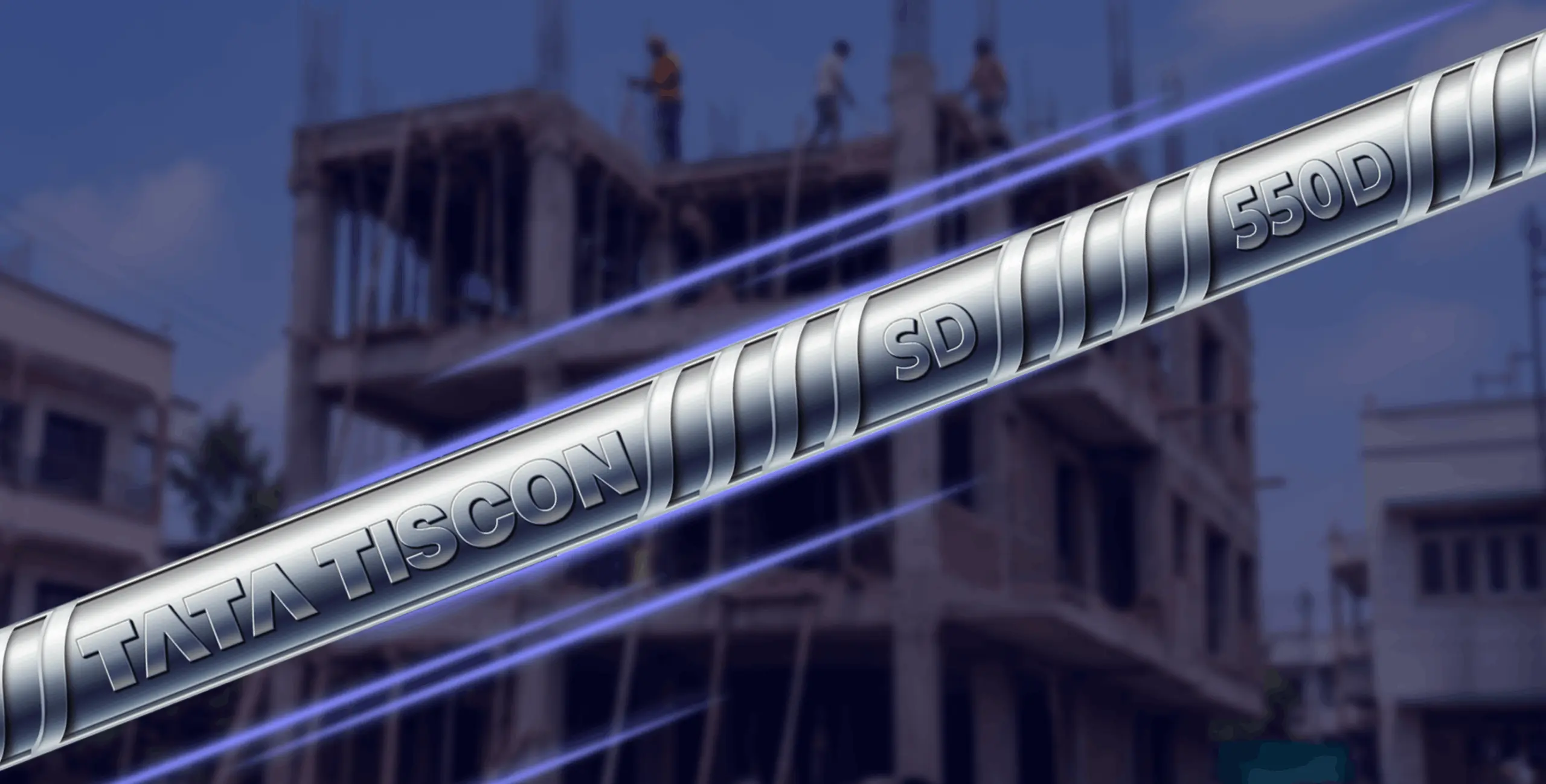
- 550 SD TMT rebars: Advanced reinforcement grade combining strength with enhanced ductility
The selection of grade depends on multiple project conditions, including structural load, seismic zone, span requirements, and long-term durability expectations. In modern housing projects, choosing the correct grade can improve reinforcement reliability and help maintain structural stability over time.
Many contractors and builders also evaluate factors like TMT rebar price, availability, and application suitability before finalising the reinforcement grade for a project.
Fe500 vs Fe500D vs Fe550
When comparing Fe500 vs Fe500D vs Fe550, the difference is not limited to yield strength alone. These grades also differ in ductility, stress-handling capability, and behaviour under long-term loading conditions. For residential structures, reinforcement should not only support design loads but also maintain predictable performance during vibration, minor settlement, or seismic movement.
Fe500
- Suitable for standard residential structures with conventional design requirements
- Offers moderate ductility for regular service conditions
- Cost-effective for low to mid-rise buildings where loading demands are moderate
Fe500D
- Improved ductility with better elongation before failure
- More resistant to seismic stress and repeated loading conditions
- Preferred in earthquake-prone regions and for structures requiring higher safety margins
Fe550
- Higher yield strength than Fe500
- Can help optimise steel quantity when structural design is adjusted accordingly
- Suitable for larger spans, heavier slabs, and load-intensive structures
In a direct Fe500 vs Fe550 comparison, Fe550 provides higher strength capacity, while Fe500D often delivers a more balanced combination of safety, flexibility, and ductility for residential construction.
This is why many engineers evaluate both strength and ductility together while deciding which TMT rebar is best for home construction.
TMT Bar Strength Comparison
A proper comparison of strengths in TMT bars helps align reinforcement selection with actual structural requirements. In residential construction, performance depends not only on strength values but also on how effectively reinforcement behaves under real site conditions over time.
Strength Capacity:
- Fe500: 500 MPa yield strength
- Fe550: 550 MPa yield strength
- 550 SD: enhanced strength with improved consistency under stress
Higher strength grades can help optimise reinforcement design and reduce steel quantity when calculations and detailing are done correctly. However, structural safety still depends on proper spacing, anchorage, and reinforcement placement.
Ductility and Flexibility:
- Fe500D and 550 SD grades offer superior elongation properties
- Better crack resistance under stress improves structural behaviour
- Higher ductility is important for seismic resilience and cyclic loading conditions
Weldability and Workability:
- Higher ductility grades are easier to bend and shape accurately
- Important for complex reinforcement detailing in beams, slabs, and columns
- Better workability can improve on-site reinforcement accuracy during execution
Builders comparing best TMT rebar for house construction often consider these practical performance factors alongside strength values.
550 SD TMT Rebars: Where They Fit
550 SD TMT rebars represent an advanced generation of reinforcement developed to deliver higher strength without compromising ductility. This combination becomes especially important in modern residential structures where both load-bearing capacity and structural flexibility are required.
These rebars are designed to perform effectively under dynamic stress conditions such as vibration, load reversals, seismic activity, and long-term service loads that commonly affect residential structures over time.
Key advantages:
- Higher yield strength with superior ductility
- Better performance under dynamic and cyclic loads
- Suitable for earthquake-prone regions
- Enhanced fatigue resistance for long-term durability
Products like Tata Tiscon 550SD are engineered to maintain consistent quality standards across varying construction conditions. For projects requiring dependable reinforcement performance, many builders and contractors also compare specifications alongside factors such as Tata Tiscon 550sd price list before procurement decisions.
Today, many developers also prefer to buy 550 SD TMT rebars through verified suppliers and digital procurement channels, making TMT rebar online sourcing increasingly common in organised construction projects.
Which TMT Rebar Is Best For Residential Buildings?
Choosing best TMT rebars for residential buildings depends on several practical considerations. The ideal grade should match the structural design, environmental exposure, seismic requirements, and construction quality standards of the project.
Structural Load Requirements:
- Low-rise homes: Fe500 or Fe500D
- Multi-storey or load-heavy structures: Fe550 or 550 SD
Seismic Zone Consideration:
- High seismic zones: Fe500D or 550 SD are generally preferred
- Lower seismic zones: Fe500 may be adequate depending on design requirements
Durability and Longevity:
- Higher grades can offer improved fatigue resistance under repeated loading
- Better crack control contributes to improved long-term durability
Construction Quality and Detailing:
- Complex reinforcement layouts benefit from higher ductility
- Better bendability improves reinforcement placement accuracy on-site
For many modern housing projects, Fe500D and 550 SD grades are increasingly considered among the best TMT rebar for house construction because they combine strength, flexibility, and long-term structural reliability.
Making Reinforcement Selection More Practical
Selecting the right TMT rebar grade is not only about choosing higher strength; it is about balancing structural demand, ductility, seismic performance, and long-term durability. Proper reinforcement selection also supports better execution quality and more predictable structural behaviour over time.
For standard residential applications, Fe500D provides dependable ductility and balanced performance. For structures exposed to higher loads, larger spans, or seismic risks, Fe550 and 550 SD TMT rebars offer additional strength and resilience when supported by correct design and detailing.
A well-informed reinforcement choice improves construction reliability, supports long-term structural stability, and helps achieve safer residential performance throughout the building lifecycle.