

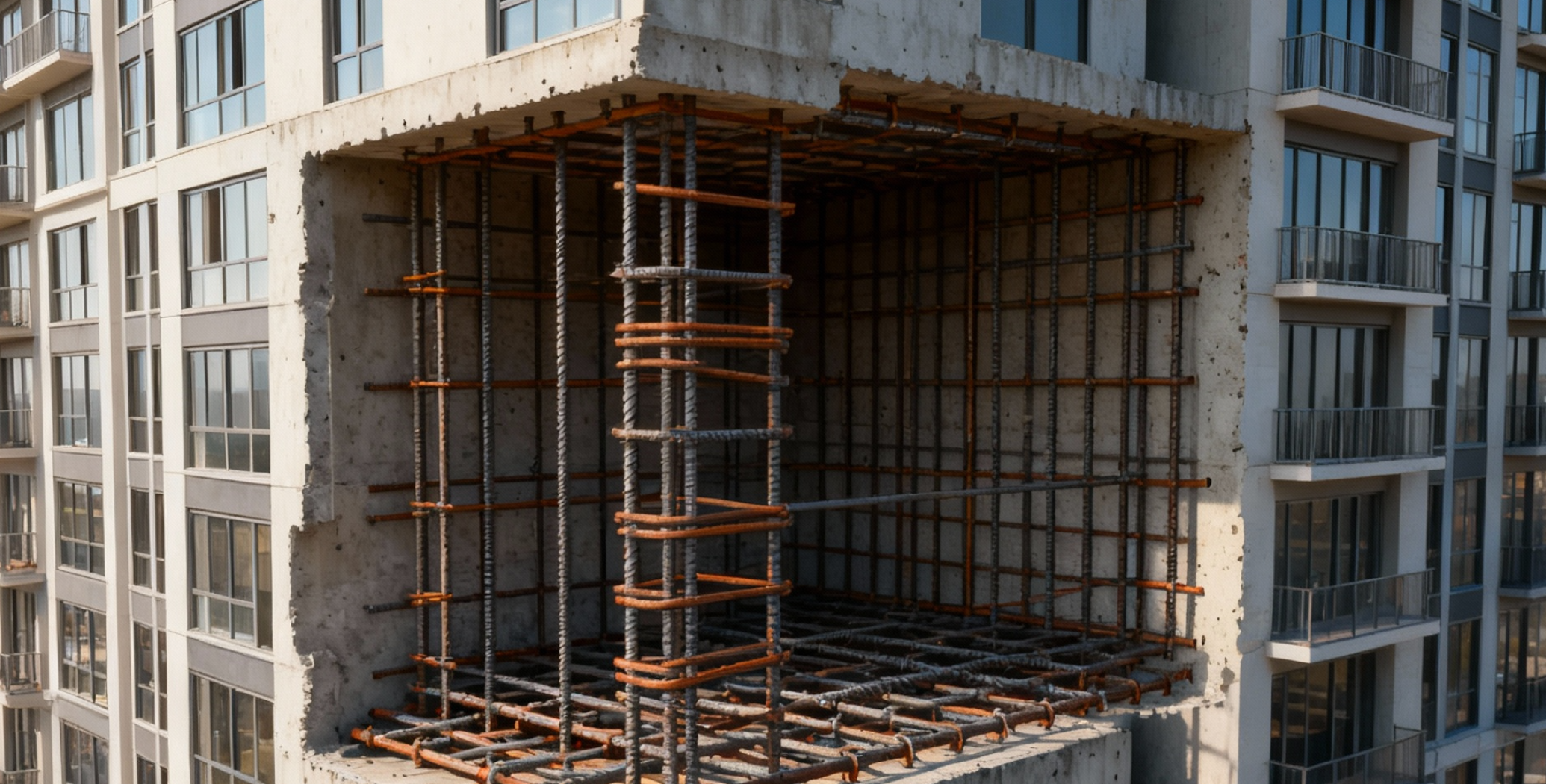
Reinforced Concrete (RCC) design continues to evolve with new safety standards and construction technologies. While longitudinal reinforcement often receives primary focus, stirrups play an equally critical role in structural stability. Selecting the best stirrups for construction requires an understanding of structural mechanics, quality control, seismic design philosophy, and fabrication precision.
Why Stirrups Matter in Structural Behavior
Stirrups in RCC beams and columns are responsible for:
- Confining the core concrete to improve ductility
- Holding longitudinal bars in position
- Resisting diagonal shear cracks
- Enhancing seismic performance and collapse prevention
Their contribution becomes critical during extreme loading events such as earthquakes. Engineers must therefore treat the importance of stirrups in RCC structures as a core design factor, not a detailing afterthought.
Types of Stirrups in RCC and Their Selection Criteria
The most commonly used stirrup configurations include:
- Rectangular
- Square
- Circular (mainly for columns)
- Helical and spiral variations
- Closed links with 135° hooks for seismic zones
Selection depends on the member geometry, load paths, and ductility requirements. In seismic Zone III and above, closed stirrups with adequate anchorage are preferred to ensure proper ductility and confinement in beams.
Next-Generation Reinforcement: Ready-Made Superlinks
Prefabricated solutions have become increasingly popular due to industry-wide emphasis on precision and speed. Superlinks such as the Tata Tiscon Superlinks are engineered to deliver accuracy in dimensions, tighter bends, and consistent mechanical performance.
Key advantages:
- Zero dimensional deviations for enhanced fitment
- Uniform bending radius to prevent brittle behavior at corners
- Faster site execution and reduced labor dependency
- Less wastage compared to manual bar bending
They address real-world construction challenges by ensuring that reinforcement detailing is not compromised on site.
Seismic Safety in Modern Housing
Growing urbanization across India has heightened the need for earthquake-ready structural design. Engineers are increasingly specifying smart stirrups for seismic safety that comply with IS 13920 provisions. Superlinks, manufactured under strict quality audits, improve shear resistance and prevent premature failure during lateral displacement events. They are ideal earthquake resistant stirrups for housing in mid and high-rise construction.
Cost Considerations and Procurement in 2026
While pricing varies by region and steel grade, digital procurement enables better planning for stirrup quantities. Engineers and contractors alike can refer to the Tata Tiscon Superlinks price list for cost-efficient ordering aligned with construction schedules.
A reliable guide to choosing stirrups prioritizes precision, confinement effectiveness, and seismic resilience. With the industry moving towards automation and standardized reinforcement, ready-made solutions like Tiscon Superlinks have become essential for structurally sound, future-ready buildings.
Engineers who specify technologically robust stirrups today ensure safer and more durable concrete structures for the generations ahead.