Designing strong concrete structures means carefully handling both the forces that pull (tension) and those that squeeze (compression). But there’s another often-overlooked force at play: shear, which tries to make parts of a structure slide past each other.
The key to resisting this?
Seemingly simple steel loops called stirrups. These aren’t just add-ons; they’re essential for stopping cracks from forming at an angle and keeping the entire structure acting as one solid piece.
Imagine a stack of books held together loosely versus one tightly bound. The loosely held stack is prone to sliding and collapsing under lateral pressure. Similarly, in reinforced concrete beams and columns, stirrups act as the binding force, resisting the internal shear stresses that can lead to cracking and ultimately, structural failure.
The Critical Function of Stirrups in Construction:
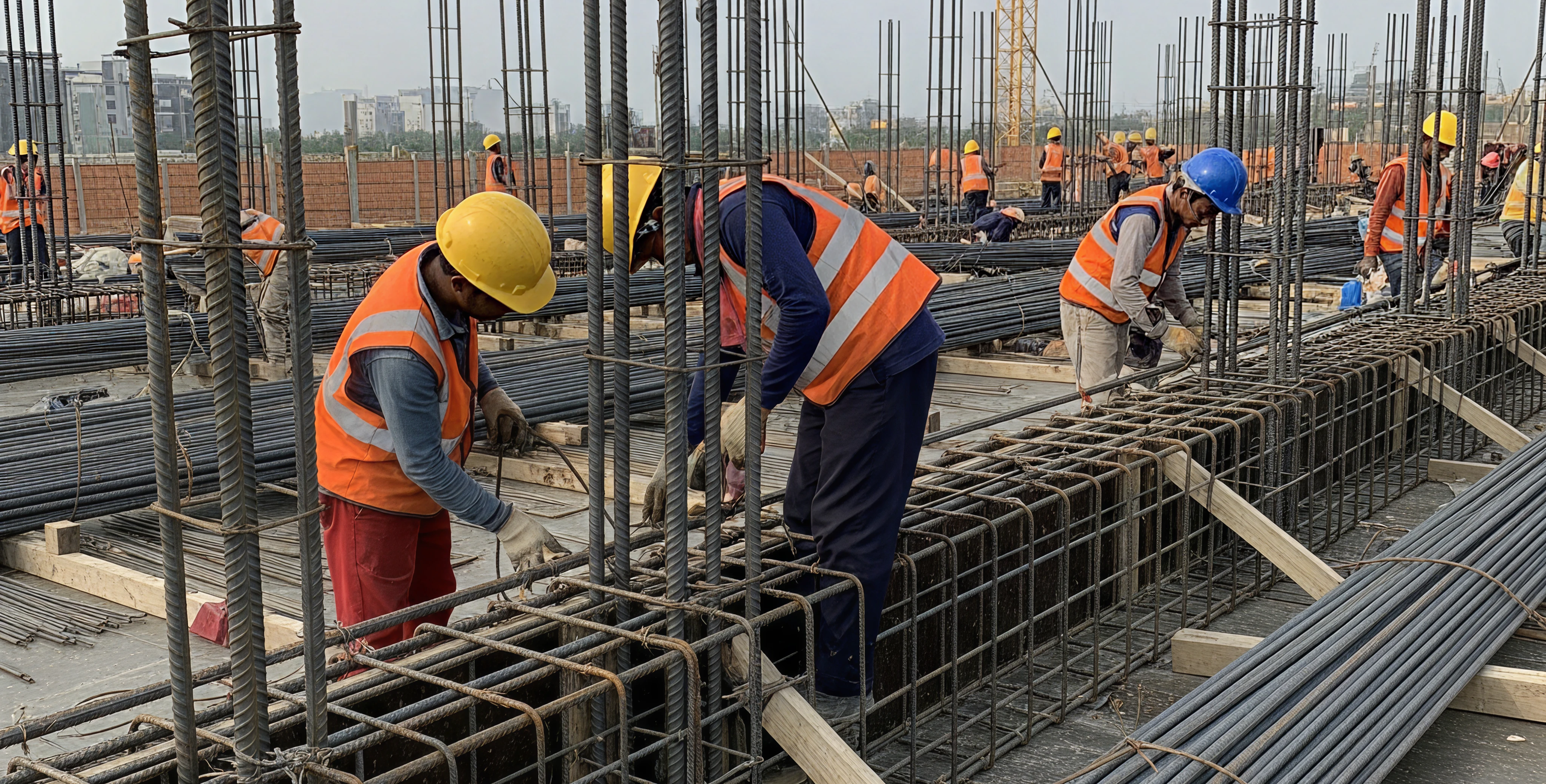
Stirrups are secondary reinforcement bars bent into various shapes (typically U-shaped or rectangular) and placed perpendicular to the main longitudinal reinforcement. Their primary functions include:
- Resisting Shear Forces: Shear forces act parallel to the structural member and can cause one section to slide past another. Stirrups are specifically designed to intercept these shear cracks and prevent their propagation, maintaining the integrity of the beam or column.
- Preventing Diagonal Tension Cracks: Shear forces induce diagonal tensile stresses within the concrete. Stirrups effectively resist these tensile stresses, preventing the formation of diagonal cracks that can lead to sudden failure.
- Providing Confinement to Concrete: In columns, particularly under compressive loads, stirrups provide lateral confinement to the concrete core. This confinement increases the concrete’s compressive strength and prevents it from buckling or crushing prematurely.
- Holding Main Reinforcement in Place: Stirrups act as spacers, ensuring that the main reinforcing bars remain in their correct positions during concrete pouring. This proper placement is crucial for the intended structural behaviour of the member.
- Preventing Buckling of Compression Reinforcement: In beams and columns subjected to bending, some of the main reinforcing bars are under compression. Stirrups provide lateral support to these compression bars, preventing them from buckling under load.
The Limitations of Traditional Stirrups:
While traditional bent stirrups are effective, their installation can be labour-intensive and may sometimes lead to inconsistencies in placement and tying. This is where innovative solutions like Superlinks offer significant advantages.
Introducing Superlinks: Engineered for Enhanced Safety and Efficiency:
Superlinks are essentially pre-fabricated, closed-loop steel reinforcement elements designed to replace traditional stirrups. They offer several benefits that contribute to improved structural safety and construction efficiency:
- Superior Confinement: Being closed loops, Superlinks provide more effective confinement to the concrete core in columns, enhancing their resistance to both shear and compressive forces, especially in seismic zones.
- Enhanced Shear Resistance: The closed configuration of Superlinks offers improved resistance to shear stresses compared to open U-shaped stirrups.
- Precise and Consistent Placement: Pre-fabrication ensures accurate dimensions and consistent placement, reducing the chances of errors during installation.
- Faster Installation: The ease of handling and installation of Superlinks can significantly reduce construction time and labor costs.
- Improved Structural Integrity: The enhanced confinement and shear resistance provided by Superlinks contribute to a more robust and durable structural frame, ultimately improving building safety.
Why Superlinks are Important for Reinforcement:
In critical structural elements, especially in high-rise buildings and structures in earthquake-prone areas, the enhanced performance offered by Superlinks can be invaluable. Their ability to provide superior confinement and shear resistance translates directly to increased safety margins and reduced risk of structural failure.
Choosing the Right Stirrups and Superlinks:
Selecting the appropriate type and size of stirrups or Superlinks depends on the specific structural requirements determined by engineering design. Factors such as the magnitude of shear forces, the size and shape of the structural member, and seismic considerations all play a crucial role in the selection process. It is essential to source these critical components from reputable stirrups manufacturers and Superlinks manufacturers who adhere to stringent quality standards.
While traditional stirrups remain a fundamental element in reinforced concrete, the emergence of Superlinks represents a significant advancement in reinforcement technology. By providing enhanced confinement, superior shear resistance, and improved construction efficiency, Superlinks contribute to building safer, more resilient, and longer-lasting structures. Understanding the role of both stirrups and innovative solutions like Superlinks is paramount for every construction professional committed to excellence and safety.
Learn more about Tata Tiscon Superlinks at Tata Tiscon.